Earlier today, I accompanied my nephew for his first day in a new school. I was worried because it was the middle of the school term and we were moving him to a new institution where he had no friends and admittedly was nervous. I was also worried because of the circumstances which has informed our decision to change his school. I sat in the headteacher’s office and watch with increasingly trepidation as he was led up the staircase into what would become his new classroom. I could not bring myself to leave despite being assured by the headteacher that he would be alright.
I silently wished that I had given him one final hug and assured him about how much I believed in him. “You will be alright,” I heard myself whisper unsure if I needed to say that for him or for me. And then suddenly, he walked back into the headteacher’s office past my sister and into my arms as though wanting to tell me something. Tell me something he did but it was not the kind of thing you want to hear in these circumstances.
“Aunty Del, I went into class and they asked me to kneel down,” he said, the tears now streaming down his face uncontrollably.
Hugging him tightly I asked who “they” referred to.
“A teacher who was in the classroom,” he whispered still crying uncontrollably.
Immediately I asked the headteacher if that was some welcome ritual for new students at her school. She appeared shocked at the news and left to find his class teacher while my boy told me the rest of the story.
“I went in and left my backpack on my desk,” he continued. “Then I turned to walk back down the steps to join the rest of the students at the assembly ground but the teacher asked me to kneel down. I told him that I was a new pupil but he insisted that I kneel down.” The tears stream down as he relives the nightmare he had just experienced.
Unsure what soothing thing to say, I asked him “so what did you do?“
“I kneeled down and he later asked me to get up,” he sobbed on.
The headteacher returned with the classroom teacher and I was relieved when he said “it was not him.” Those four words helped me relax because they reassured me that the impact of that nightmare would not last long. I comforted him some more and had a conversation with the teacher who joined me in helping him calm down. I then watched with wet eyes as he led him back up the stairs into the same classroom which had represented a nightmare for him just moments earlier in a completely unfamiliar environment.
So why am I telling this story?
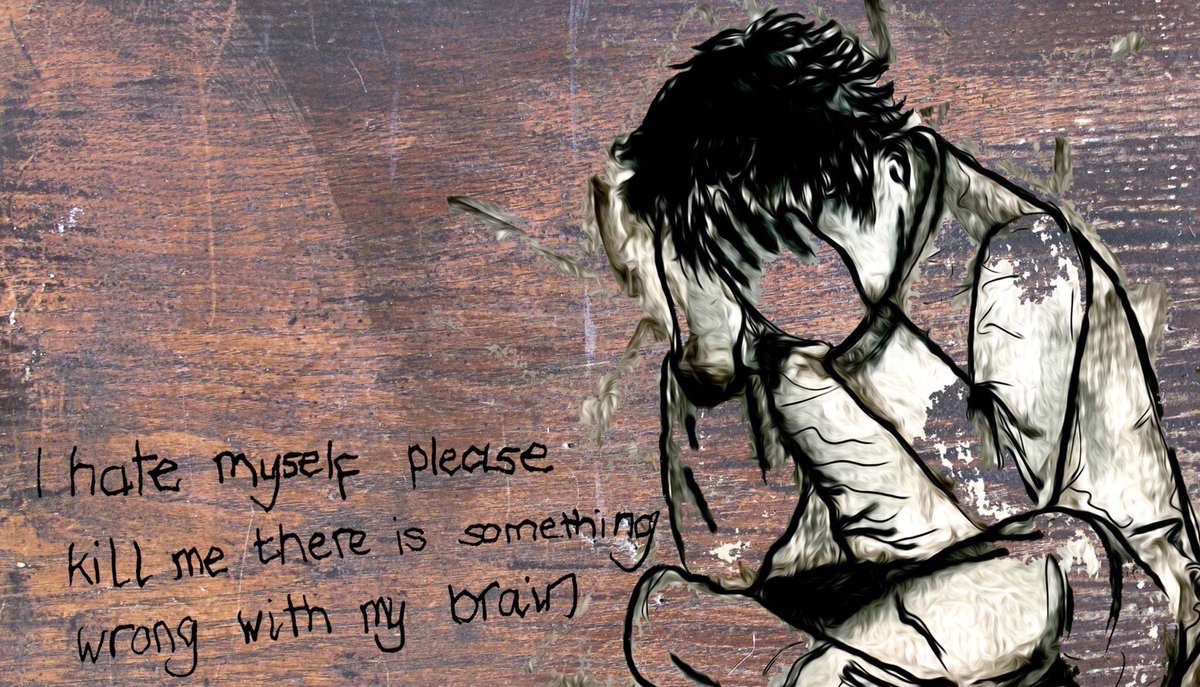
Because I want to shine light on a silent crippler amongst us. It is called TRAUMA.

What is trauma?
I don’t mean it in the sense that health professionals use it in the emergency room to refer to physical injuries. I am talking about emotional and psychological trauma. The kind that does not result in any broken bones or other physical injuries yet has the power to deliver life-altering blows to any and all of us. It has the potential to incapacitate even the most resilient in our midst and affects babies, children and adolescents in much the same way that it does young adults, adults and the elderly.
There could be no more simpler definition than the one provided us by wikipedia which I have slightly modified. Psychological trauma is a type of damage to the mind that occurs as a result of a distressing event. It is often the result of an overwhelming amount of stress that exceeds one’s ability to cope, or adequately process and integrate the emotions involved with that experience. It is important to note that the event doesn’t need to rank top on any categorization of distress provided by anyone anywhere.
How can I know when a child is suffering from trauma
The question is not if children suffer from trauma. The challenge I see is how we can identify it. In the past few weeks, I have seen it in men, women and children that I work with but this post focuses on trauma in children. Although the majority of studies on trauma have involved adults, children are just as, if not more, vulnerable to it. When a child experiences an event that qualifies as traumatic it can lead to complications in all areas of life if not well handled. Some of the symptoms include development of fears, separation anxiety, sleep disturbance/nightmares, sadness, loss of interest in normal activities, reduced concentration, decline in school work, anger, somatic complaints, irritability. (APA, retrieved on November 8th). Basically, trauma can throw a child’s internal world so out of form that he/she morphs into something or someone else.
Causes of Trauma in children
When it comes to which events can be traumatic for children, the spectrum is pretty wide. Some of them include abuse (physical, sexual, verbal, emotional etc.) domestic violence, community or school violence, medical trauma, motor vehicle accidents, acts of terrorism, war experiences, natural and human-made disasters, suicides, deaths or other losses etc. This is by no means an exhaustive list and traumatic events could either be one-time or ongoing. Sadly, already traumatized children can get re-traumatized by the events they are made to endure.
How can I help children deal with trauma?
The degree of trauma that a child suffers from is determined by the length of time that the trauma is experienced, the severity of the traumatic experience, the resilience of the child, and the availability of support resources to the child before, during and after the experience. Depending on the extent of the trauma, the child might need long term therapy to properly deal with it but there is something that we can each do to help.
1. Acknowledge the trauma
In our Cameroonian (and other African cultures by extension), trauma often goes unnoticed. Children are often expected to move on from some of the things that happen to them. More than once, I had to interject when someone at my nephew’s school this morning was trying to minimize his pain. By just acknowledging that he was hurt and holding him while he cried, I helped him return to the “normal” which the event had threatened to expel him from. Whenever we minimize a child’s pain and, worse still laugh at him/her for feeling it, the child is left confused and disoriented.
2. Create a safe space for him/her to process it
My nephew found safety in my arms this morning immediately following his trauma. I have never been more grateful for being at a place as much as I was this morning. I shudder to consider what might have happened to him if I were not there. Notice that he walked all the way back down from his classroom to talk to me. I was his safe space in that moment. That is why he ran back to me. The question you need to ask here is “how do the children in my circle perceive me?” If a child does not perceive you as safe, they will not come running to you in the face of trauma. So be intentional about building trust with children. Are you a parent, a teacher, a sister/brother, a neighbor, etc? Do the children in your life trust you enough to come running to you?
3. Refer the child for help
For children who have not had any help processing their trauma, ongoing therapy is needed to help them overcome the setbacks and become functional again. Some have already been traumatized and re-traumatized in ways that have made it impossible for them to trust any adults. Even they still need help. Do you know any such children today? Please refer the child for help today or leave a message in the comments section and I will try to point you to reliable resources.
4. Spread the news
We live in a society that traumatizes children on a daily basis. From homes with absentee parents to school environments where educators still erroneously believe that they can beat the knowledge into the heads of their pupils/students to communities where kids are easily knocked out of the way in the crazy quest for survival to a society that continues to tolerate and even encourage human rights abuses, Cameroonian kids are exposed to traumatic events on a daily basis. Sadly, no structures exist to help them deal with it. We can change that. We will change that. But we have to each commit to be shine a light on it until every child everywhere gets the support they need.
My nephew was able to get some support from me and her teacher this morning and I am looking forward to continuing that process when he gets home from school. Unfortunately, there are countless children just like him whose trauma is not even acknowledge and consequently they have no safe spaces to process it.
When not properly treated, the long-term consequences of trauma can be serious leading to more psychological disorders like post-traumatic stress disorder (PTSD) or even physical problems like substance abuse, personality problems, depression, suicide etc.
Of course an exhaustive discussion of this subject is beyond the scope of a single blogpost but if this is a subject that is as close to your heart as it is to mine, let us talk. Leave me a comment below and I will share with you what we are currently doing to help and how you can get involved.
Together let us build a society free of both long and short term effects of this silent disabler.
 Journey with Della